The History of Mahjong in America
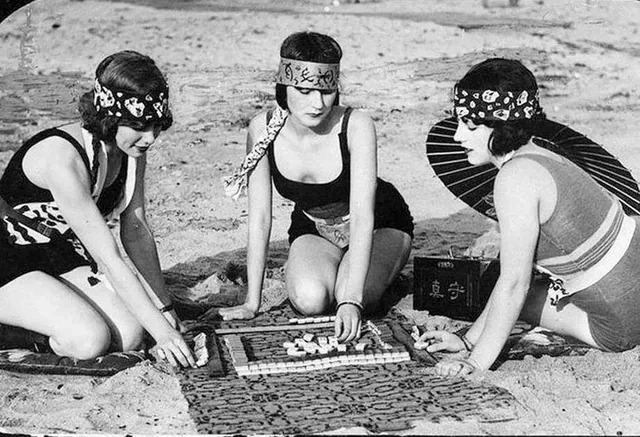
Though it originated in China, Mahjong has a rich history in America too! After originating in China in the 19th century, mahjong was brought to the United States in the early 1920s by American expatriates, travelers, and businessmen like Joseph P. Babcock, who worked for the Standard Oil Company in Shanghai. Babcock published a simplified rulebook in 1920 that made the game accessible to Westerners. It quickly exploded into a massive national fad, played by everyone from Hollywood celebrities to President Warren G. Harding. Department stores sold luxury bone-and-bamboo sets, and the game became so popular that Congress imposed a specific tax on mahjong sets in 1924.
As the 1920s fad subsided, the game was heavily adopted within Chinese American and Jewish American communities, often serving as a dual symbol of cultural preservation and American assimilation. Because hundreds of regional rule variations existed, a group of Jewish women in New York City banded together to standardize the game. They formed the National Mah Jongg League in 1937, which fundamentally reshaped the game by introducing Joker tiles, developing the yearly card of winning hands, and creating what is now known as American Mahjong.
During the 1950s and 1960s, the game became a profound cultural touchstone for suburban Jewish American women. Regular weekly games provided young mothers a designated time to socialize, bond, and build supportive networks during a period of shifting gender norms and suburbanization. The game's iconic accessories—such as colorful tile racks, coin purses, and card tables—became fixtures in postwar homes.
American Mahjong remains an active, evolving pastime. Tournaments are held across the country, and the National Mah Jongg League continues to update and release a new scorecard of winning hands every year. While it has changed and adapted significantly from its original Chinese roots, mahjong in America stands as a unique blend of cultures, community, and strategy.